OTIF Compliance: The Retailer Penalty That Quietly Kills Emerging CPG Brands
OTIF failures cost CPG founders 3% of invoices and retailer relationships. Learn how to build operational reliability before major retailers hold you accountable.
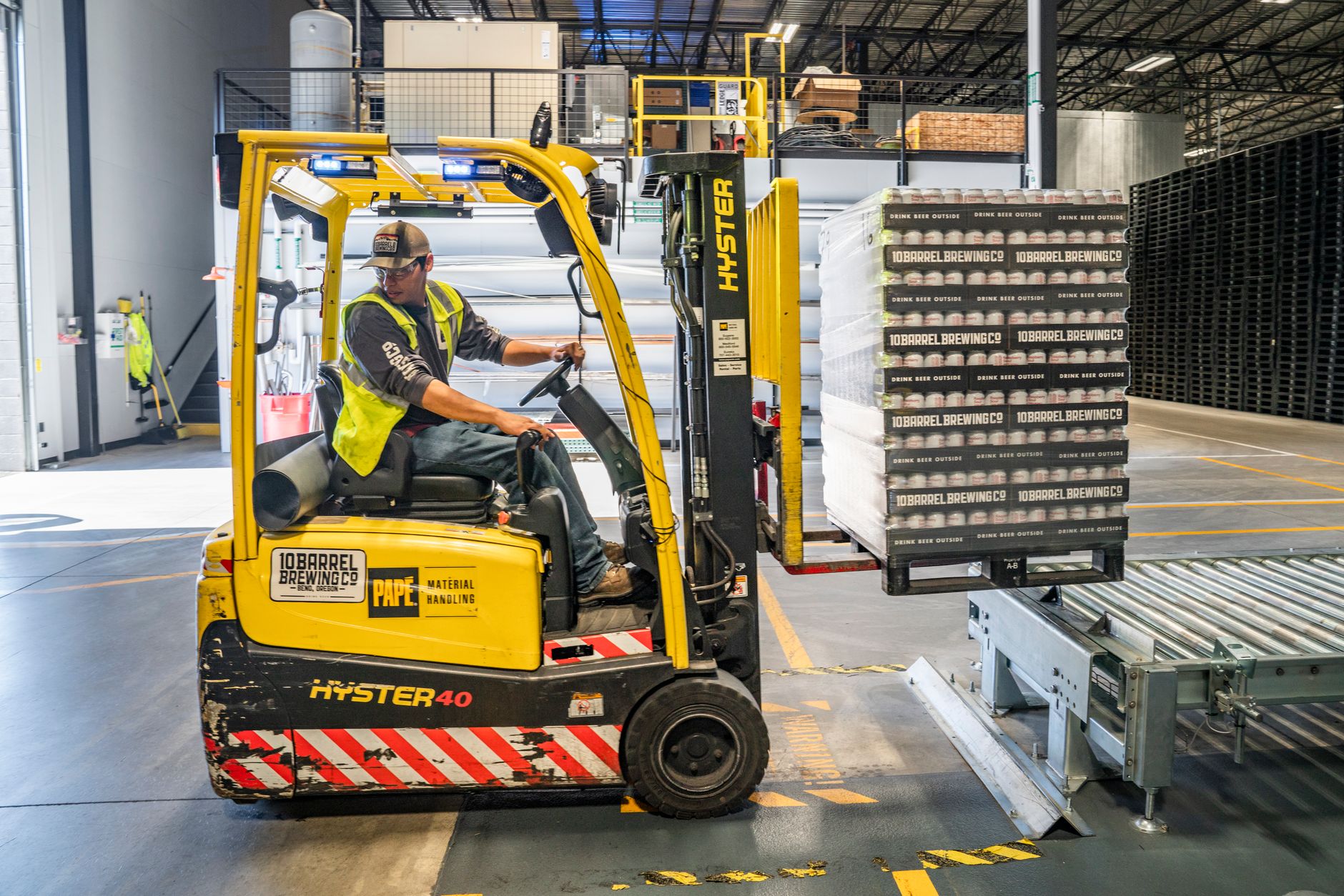
It was 2 a.m. in our San Diego facility. We were mid-run, filling orders, when the power went out.
The transformer was on the roof. Only the landlord had the key, and he was asleep at home. So our production crew did what Suja crews did — they found a tree next to the building, climbed it, jumped from a branch onto the roof, and manually reconnected the circuit. Orders shipped on time. Our customers never knew what it took to get the product to them that night.
That story is funny now. At the time it was just... Tuesday.
And here's what I think about when I tell it: our retail partners never needed to know that story. Because the product showed up. That's the entire game at the operational level. Show up. On time. With the right product. At the right quantity. Every single time.
That's OTIF. And if you're in retail — especially mass retail — you need to understand it cold, because the penalty for getting it wrong isn't just operational. It's financial. And it's reputational in ways that take years to recover from.
What OTIF Actually Means
OTIF stands for On Time, In Full. It measures whether you delivered to a retailer's distribution center — or directly to a store — on the requested delivery date, with 100% of the ordered quantity.
Both halves count. You can deliver all the product but miss the delivery window. That's an OTIF failure. You can hit the delivery window but ship 85% of the order. That's also an OTIF failure.
Walmart formalized this into a scorecard in the mid-2010s and made it one of the most discussed operational metrics in CPG. They set the bar at 98%. If your OTIF score falls below 98%, they charge a 3% deduction on the invoice value of the non-compliant shipment. Not 3% of the shortage. 3% of the whole invoice.
Target, Kroger, Albertsons, and most major mass retailers have followed with their own versions of the same program. The names and thresholds vary slightly, but the concept is universal: show up when you say you will, with what you said you'd bring. Or pay.
For a small emerging brand doing $5M a year with one mass retailer, a 3% penalty on a year of invoice volume is $150,000. That's not abstract. That's your marketing budget. That's two positions on your team. That's your quarterly profit margin if you're lucky enough to have one.
CPG is a "penny profit" business. The pennies matter. OTIF failures are dollars.
Why Emerging Brands Struggle With This
The honest answer is that most emerging brands are optimized for getting to the shelf, not for staying on the shelf reliably. They spend 90% of their early energy on distribution — getting into retailers, getting facings, getting endcap placements. The operational infrastructure to actually service those accounts at scale? That gets built on the fly, usually after the first penalty hits.
I've seen it over and over again. A brand lands a Walmart or a Target deal, celebrates, posts about it on LinkedIn... and then three months later is quietly getting deducted because they can't consistently hit 98%.
Here are the five most common failure modes:
1. Insufficient safety stock. You're running lean because cash is tight and your CFO is watching inventory carrying costs. So when demand spikes or your co-manufacturer has a production issue, you're stuck. No buffer. No fallback.
2. Single-source co-manufacturer. At Suja we eventually scaled to seven manufacturing locations in five years. Part of that was growth. Part of it was deliberately de-risking our supply chain so a single facility failure didn't take down national distribution. Most early brands have one co-manufacturer. If they have a problem, you have a problem.
3. Forecasting that's optimistic, not accurate. There's a version of demand planning that's really just wishful thinking in a spreadsheet. You assume your new retail launch will drive 2x velocity because that's what you told investors. The reality comes in at 60% of forecast, you over-ordered ingredients, and now you're sitting on three months of raw material that's tying up cash you needed for something else. Hope is not a strategy. Build your plan around realistic velocity expectations, not aspirational ones.
4. Transportation and scheduling breakdowns. Even if the product is ready, getting it to a DC on time is its own problem. Carriers miss windows. Appointments get rescheduled. Your internal team doesn't have anyone who actually owns the relationship with the 3PL. The product sits in a trailer for two extra days. That's an OTIF miss.
5. No internal owner. This is the biggest one. OTIF doesn't have a natural home in an early-stage CPG org chart. Sales doesn't own it. Ops doesn't fully own it. Supply chain (if you have that function) thinks it's a customer service problem. The result is that nobody's watching the scorecard weekly. Nobody's proactively communicating with retail partners when there's going to be a shortfall. The retailer finds out through the data, not from you.
The Standard Isn't Getting Easier
One thing I want to say clearly: retailer compliance expectations are going up, not down.
The largest retailers in the country have invested billions of dollars in supply chain infrastructure and technology. They know exactly when your truck is supposed to arrive, what's on it, and whether that matches what they ordered. The days of a phone call to your buyer buying you grace on a late shipment... those days are largely over at scale.
That doesn't mean relationships don't matter. They absolutely do. I've seen brands survive near-term OTIF struggles because they had honest, proactive communication with their buyer and a credible plan to fix the problem. What doesn't work is silence. What doesn't work is explaining the same supply chain issue three cycles in a row.
The truth of the business is at the shelf. And the truth of your operations is in your OTIF score.
Building OTIF Reliability — The Practical Framework
This isn't magic. It's discipline. Here's what it actually requires:
Set a 98% internal target, not 95%. If your goal is to hit 95%, you'll average 92% when variability hits. If your goal is 100%, you'll average 97-98%. Build the buffer into the target, not just the inventory.
Own your 13-week demand forecast tightly. I've written about the weekly cash review, but OTIF starts with demand planning. If your forecast is off by 30%, your ability to service accounts is compromised before anything else goes wrong. Invest in this early. Use your scan data, talk to your brokers, challenge your velocity assumptions regularly.
Build safety stock into your budget, not as an afterthought. Yes, it ties up cash. So does a 3% penalty and a retailer deduction you have to fight for six weeks. For most consumable products, 2-3 weeks of safety stock at the retailer level is a defensible minimum. At peak demand seasons, consider 4-6 weeks.
Have a co-manufacturer contingency plan. I'm not saying you need to dual-source from day one — that's often not realistic. But you should know who your backup is, what it would take to switch, and how long that transition would take. If the answer is "I have no idea," that's a risk you need to price.
Assign OTIF ownership. Put someone's name on this metric. It should be on their weekly dashboard. They should be reviewing retail portals, communicating proactively when there's a potential shortfall, and tracking retailer scorecards the week they're issued. Not the month after.
Communicate ahead of problems, not after. When you know there's going to be a 15% shortfall on a Walmart order, call your buyer. Don't wait for the deduction. Buyers remember who gave them advance notice versus who made them discover it. That relationship goodwill has real value at line review time.
When You Miss — The Recovery Playbook
You will miss OTIF at some point. Every brand does. Here's how you handle it:
First, own it fast. Don't send a form letter. Get your sales lead or the account owner on the phone with the buyer within 48 hours of the miss. Here's what happened, here's what caused it, here's what we're doing to prevent it.
Second, bring the solution, not just the explanation. Buyers hear reasons all day. What they want to know is whether this is a pattern or an event. Come with a corrective action plan and a timeline.
Third, fight deductions you believe are wrong. Retailers make mistakes. Sometimes OTIF deductions are assessed incorrectly. You have a window — usually 60 days — to dispute deductions with documentation. Know your rights, have your paperwork, and dispute the ones that don't hold up. This is part of running a tight operation.
Fourth, don't let one miss spiral. A single shortfall is recoverable. Three in a row is a pattern that buyers bring to line reviews. If you have a systemic problem — a co-manufacturer issue, a shelf life constraint, a forecasting breakdown — fix it upstream, not just symptom by symptom.
The Bigger Point
There's a version of this business where you think distribution wins are the whole game. You get the doors, you count the facings, you celebrate the retail logos on your website.
Distribution is table stakes. Velocity is what gets you reordered. And reliable service is what keeps you in consideration for the next reset.
The brands I've watched fail in retail — not all of them, but many — struggled with operations as much as they struggled with velocity. They got to the shelf. They couldn't consistently fill the shelf. And their retail partners, quietly and without fanfare, reduced their facings at the next reset and gave the space to someone who could.
Don't confuse distribution gains with operational credibility. They're not the same thing. You earn one with a sell-in. You earn the other by showing up. Week after week. Order after order. 98% of the time or better.
The 2 a.m. transformer moment? Our crew solved it because that's the culture we built. They knew they wouldn't get in trouble for trying, even if the plan hadn't worked. Build a culture that owns the operational details and treats every missed shipment like a failed play. Because it is.
Want to build the operational foundation that keeps you on the shelf long-term? The MBA for CPG goes deep on supply chain, demand planning, and retailer compliance. And if you're in a growth stage and need help closing the operational gaps fast, the 90-Day Breakthrough is built for exactly this.
Want more insights like this?
Get Jeff’s take on what’s actually working in CPG. Direct to your inbox.