The CPG Freight Trap: Your Logistics Bill Is Quietly Eating Your Margin
Most CPG founders obsess over COGS and ignore freight — until it kills their margins. Jeff Church on the four freight buckets, benchmarks, and how to stop the bleed.
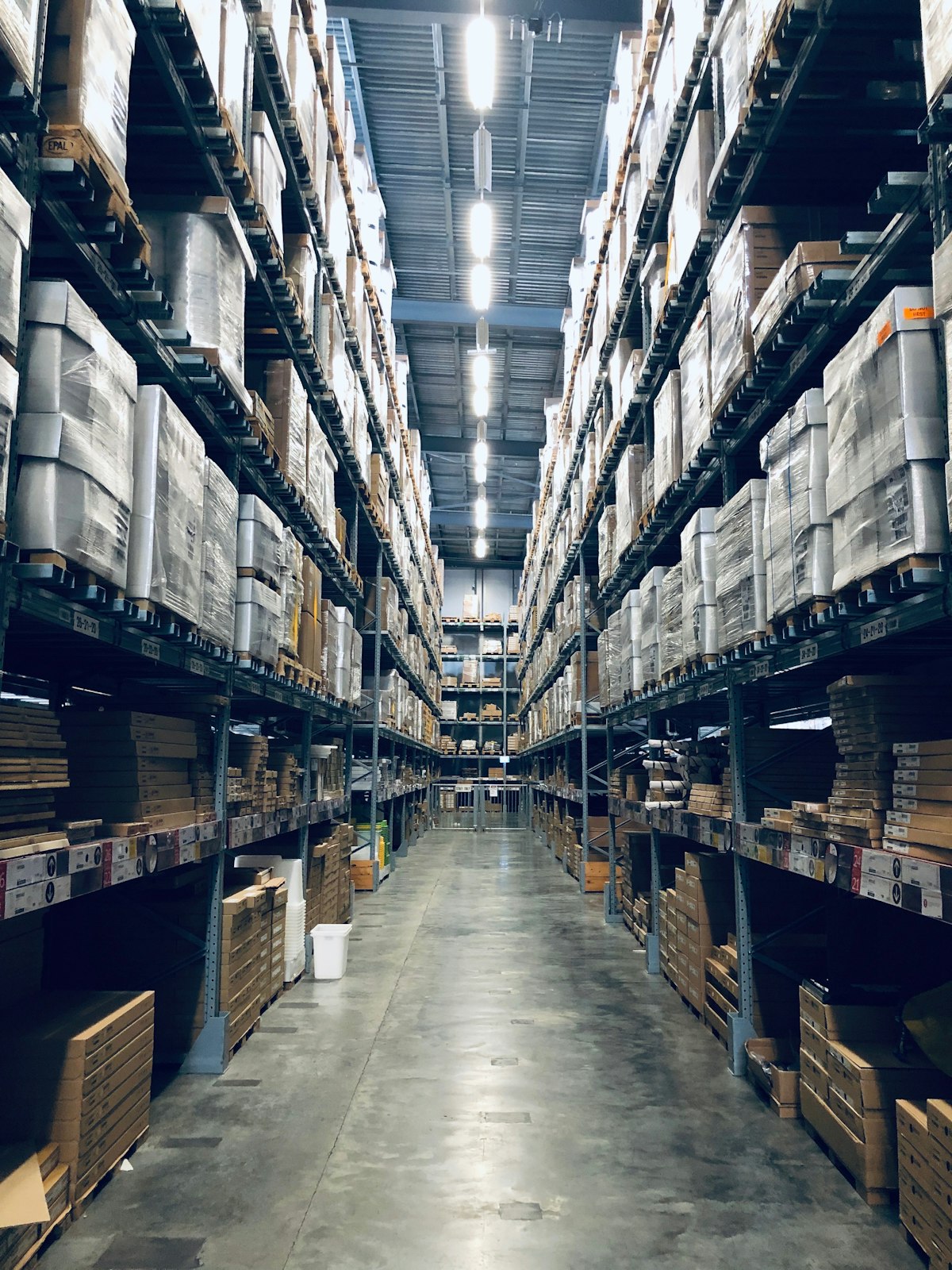
The first time I delivered product to a Whole Foods distribution center, I drove a 28-foot truck.
I want you to picture that. A line of 53-foot semis, professional drivers who've been doing this for decades, backing in with the casual precision of guys who park those things in their sleep. And then me, pulling up in a box truck a fraction of their size, trying to look like I belonged.
I didn't.
Then I tried to unload pallets with a forklift I had no business operating. I sliced into a pallet. Beet juice went everywhere.
That story gets a lot of laughs. It should. But it was also the moment I understood something fundamental about this business: distribution isn't free, and it isn't forgiving. The product you spent months formulating, the packaging you agonized over, the co-manufacturer you finally found... none of it matters if you can't get it to shelf efficiently and profitably.
Most early-stage CPG founders understand that in principle. What fewer understand is just how much freight and logistics costs are quietly bleeding their margin. And by the time they notice, the damage is already done.
The Problem With Freight Is That It's Invisible Until It Isn't
Go ask a hundred early-stage CPG founders what their biggest COGS concern is. Ninety will say ingredients. Twenty will say packaging. Maybe fifteen will mention co-man rates.
Three will mention freight.
That's the trap. Freight doesn't feel like a product decision. It feels like a logistics decision. And logistics feels like "someone else's department" until you're looking at a P&L that makes no sense and you're trying to figure out where all the margin went.
Here's what I've learned across eight companies and $212 million raised: freight and logistics typically runs 4 to 8% of net revenue for a well-run CPG brand. Get above 10%, and you're in trouble. Stay above 10% for more than two quarters without addressing it, and you're quietly building a business that can never be profitable at scale.
CPG is a "Penny Profit" business. The pennies matter. Every single one of them.
The Four Freight Buckets (And Why Each One Leaks)
Most founders think of freight as one thing: shipping product to a retailer. It's actually four things. Each one is a place where margin quietly disappears.
1. Inbound raw materials
Getting ingredients and packaging materials from your suppliers to your co-manufacturer. If you're not coordinating consolidation... pooling shipments, optimizing your run schedule to align with supplier lead times, negotiating inbound freight terms into your supplier agreements... you're paying LTL (less-than-truckload) rates for things that should be moving FTL (full truckload). At scale, LTL can cost 20 to 30% more per unit than a properly planned FTL move. Nobody talks about inbound freight. Your P&L knows.
2. Co-man to your warehouse
This one hides inside your co-man relationship. Some co-manufacturers build freight costs into their per-unit cost. Others bill it separately. Some use their own carriers; others let you manage it. Know exactly how your freight is moving from production to storage, who's managing the carrier relationship, and what you're paying per pallet mile. If you don't know that number off the top of your head, figure it out this week.
3. Outbound to distributors and retailers
The most visible bucket, and the one founders negotiate worst in early deals. When you're small and desperate for distribution, you take whatever freight terms the distributor offers. Sometimes that means paying freight on your first 30,000-case order when a more experienced founder would have negotiated prepaid above a certain volume threshold.
Your routing guide compliance matters here too. Large retailers have required carriers and delivery windows. Miss a window or use a non-approved carrier, and you're looking at a deduction.
4. Deductions and returns
This is where the real money disappears. A distributor or retailer hits you with a freight shortage claim. A delivery doesn't arrive in their window. A pallet gets refused because the product is below their minimum days-remaining threshold.
These show up as deductions on your invoices, weeks after the fact, when you've already moved on to the next fire. If you're not auditing and disputing deductions with the same rigor you apply to trade spend, you're leaving real money on the table. I've seen brands lose 2 to 3 full margin points in this bucket alone.
The Shelf Life Connection Nobody Talks About
This is something I lived at Suja, and it connects directly to your freight economics in ways most founders don't see until it's too late.
When we launched, we had a 22 to 24-day shelf life on our cold-pressed juices. That sounds like a product problem. It was actually a logistics problem.
With 24-day shelf life, every day in transit was a day off the shelf. A truck that took three days to get from our facility in San Diego to a distributor in Boston left us with three weeks of remaining shelf life before hitting minimum thresholds. If that shipment moved by air freight because we were panicking about a retailer commitment... we just destroyed the margin on that delivery.
Eventually, we extended shelf life to roughly 100 days through significant HPP technology investment. That single change did more for our logistics economics than any carrier negotiation I ever had. Suddenly we could plan shipments weeks in advance. We could consolidate loads. We could fill trucks. We could ship ground instead of air. Our shelf life extension opened up national distribution and club stores in ways that had nothing to do with product quality and everything to do with freight math.
Shelf life is a freight cost. If you haven't solved it, you're either bleeding on expedited freight or you're operating in a geographic footprint much smaller than your business needs.
What Good Freight Management Actually Looks Like
Here's the honest version. Most early-stage brands should not be managing freight themselves. They don't have the volume to negotiate real carrier rates, and they don't have the operational bandwidth to manage routing guides, carrier compliance, and deduction disputes simultaneously.
Here's what I'd tell a founder in years one through three:
Lean on your co-man and 3PL. They have freight relationships and volume you don't have yet. Get transparency into what you're paying per pallet. Push for the rates their volume earns, not the rates your volume earns. Don't accept opaque freight invoices — demand line-item clarity.
Audit your deductions every 30 days. Not quarterly. Every 30 days. A deduction that goes unchallenged for more than 45 days is almost impossible to win back. A 30-day audit cycle catches problems while you still have the leverage and the documentation to dispute them.
Model freight as a percentage of net revenue, not a fixed dollar amount. It's much easier to catch when it's trending wrong. Set a benchmark for your brand. Mine is under 7% of net revenue for a brand in its first three years. If you're above that, start asking why immediately.
Put your carrier relationships out to bid annually. Once you hit meaningful volume (call it 200-plus pallets a month), your annual freight spend is a number carriers will negotiate for. Don't accept automatic renewal rates. Competitive bids every 12 to 18 months generate real savings.
The Rule of Twos Applies Here Too
I've said this about nearly everything in CPG: it almost always takes twice as long and costs twice as much as you think. Freight is no exception.
Founders model freight in their pre-launch financial model at whatever quote they got from a carrier six months before they were actually shipping. By the time product is moving, fuel surcharges have changed. Carrier capacity has tightened. Routing guides have added new requirements. The model is already wrong.
Build in buffer. Plan for 20% more freight cost than your first quote suggests. Run quarterly freight reconciliations against your model. When freight creeps above your target percentage, flag it immediately. Because it almost never fixes itself.
Hope is not a strategy. Not for fundraising, not for retail velocity, and not for freight.
One Last Thing
The morning after the beet juice forklift disaster, I drove that 28-footer back to San Diego with dried beet juice on my shoes and a genuine education in what it costs to move product through this business.
My team wouldn't let me be embarrassed about it. By the time we got back, the story was already making the rounds. It became part of our culture. The CEO who showed up to the DC and left looking like he'd survived a war.
But the real lesson was simpler than the story. Freight is real. It's physical. It's expensive. And every case that moves through your supply chain carries a real cost that has to be built into your economics from day one, not discovered on the back end when margins are already thin.
The margin lives in the details. Not just the ingredient costs and the packaging specs and the co-man rate. The freight. The deductions. The routing guide fines. The missed delivery windows.
"Gross margin determines destiny." It determines your options, your runway, your leverage with investors, your ability to fund growth. And freight is one of the quieter ways it gets eaten alive if you're not paying attention.
CPG is a "Penny Profit" business. Don't let the freight pennies disappear while you're looking somewhere else.
Want the complete operating framework for building a profitable CPG brand? The CPG MBA Program covers the full operator's playbook from launch through exit. And if you're ready to compress years of learning into 90 days, the 90-Day Breakthrough is where we do that work together.
Want more insights like this?
Get Jeff’s take on what’s actually working in CPG. Direct to your inbox.