The CPG Founder's Playbook - Every Play You Need to Launch and Scale Your Brand
23 battle-tested plays from Jeff Church covering KPIs, fundraising, gross margins, trade spend, retail strategy, team building, and more. The complete operating system for CPG founders.
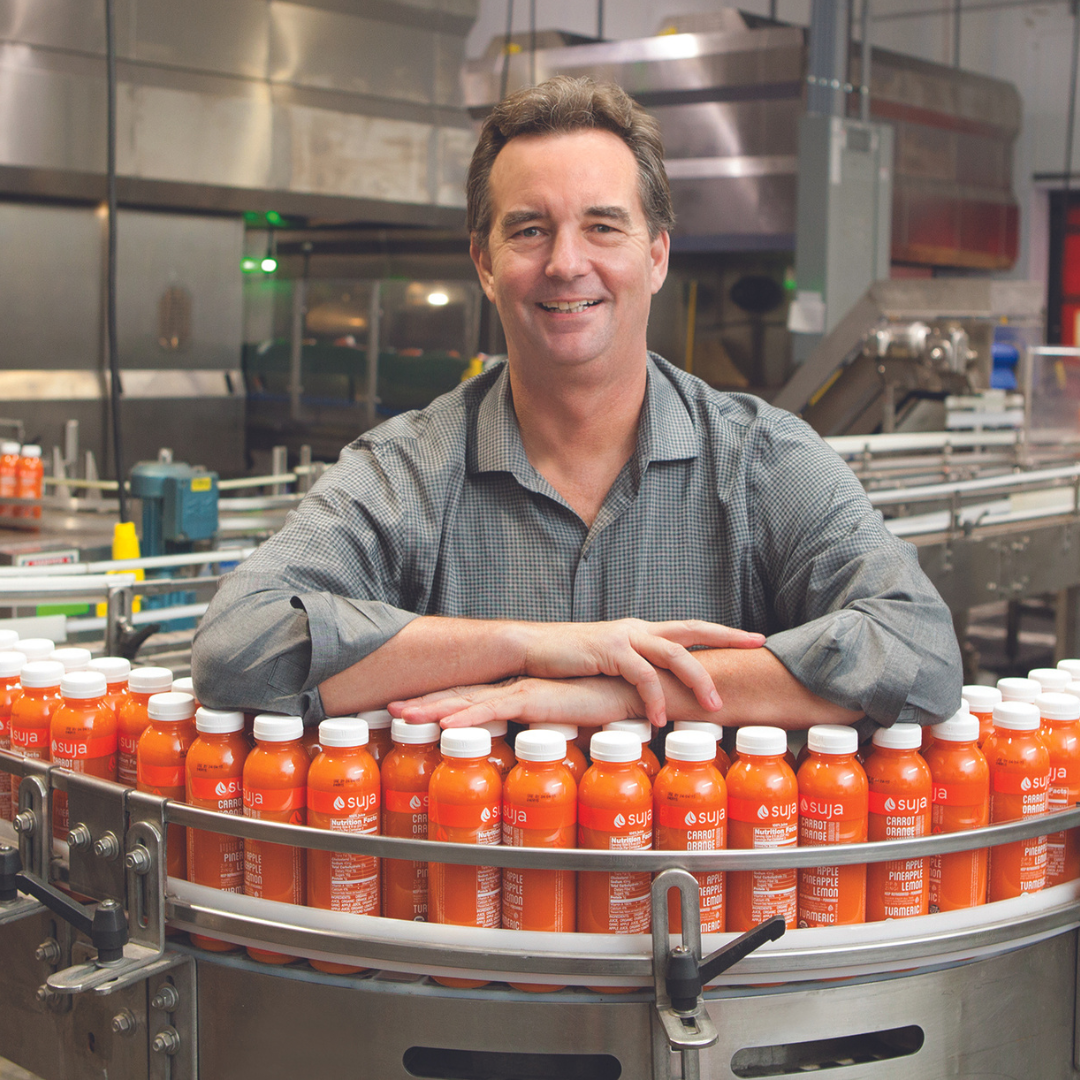
Every CPG founder starts with a great product idea. But a great product alone doesn't build a great brand. What separates the founders who scale to $10M, $50M, and beyond from those who stall out after their first retail placement is having a playbook - a set of proven moves that guide every decision from formulation to fundraising to retail expansion.
After decades of building, advising, and investing in CPG brands - including co-founding Suja Juice, which became one of the fastest-growing beverage brands in America - I've distilled everything I know into a set of plays. Think of them as the operating system for your brand. You don't have to run every play at once, but you need to know they exist, and you need to know when to deploy them.
Here's the full playbook.
First, Know Your North Stars - The KPIs That Actually Matter
Before we get into the plays, let's talk about how you measure success. I organize my KPIs into four quadrants: Brand Love, Sales & Marketing, Innovation, and Financial. You're not going to track 30 metrics at once - you pick the ones that are most relevant to your stage and your business. But here are the ones I consider non-negotiable.
Brand Love KPIs
Customer Repeat Rate - To me, this is pretty much everything in CPG. The average repeat rate in CPG is about 20%. If you're at 40%, that's best in class. If you're below 10%, that's a serious problem - it means you have to go out and acquire four times more customers than a brand with a 40% repeat rate, and that becomes very expensive very fast. And here's the hard truth: repeat rate doesn't change a lot over time. If you're at 5% and it's not moving, you probably need to rethink your positioning or your product before you pour more money into growth.
New Monthly Consumers - I like to split my ad spend 50/50 between going after existing customers and acquiring new ones. Existing customers convert easier - they already know and like your product. But if you only go after existing customers, you're on a slow decline. New consumers are the lifeblood of your future business.
Subscriptions - You should be targeting 15-20% of your revenue base on subscription, and working toward 30-35% over time. Give consumers enough of a deal to make it worth their while - they can always cancel - but subscriptions are a real, stable base of business that makes everything else easier.
Customer Lifetime Value (LTV) vs. Customer Acquisition Cost (CAC) - I measure LTV over a 12-month period. If the average customer spends $100 with you over 12 months and your CAC is $25, you've got a 4x delta. That's best in class. A 1x ratio means you're underwater. The Nirvana combination is high gross margin + low CAC + high LTV. When you have all three, you can lean into ad spend in ways you never thought you could afford.
Net Promoter Score (NPS) - It's a little harder to get, but it's worth it. Survey your brand followers and ask: would you recommend us? If you're scoring above an 8 out of 10, you're doing really well.
Sales & Marketing KPIs
Velocity (Units Per Store Per Week) - This is the single most important retail metric. Door count is important - investors want to see it, and it signals growth - but velocity is everything. I built 25,000 doors over two years at Rowdy and watched every single one of them go to zero. Chinese Water Torture, I call it. For beverage, you're looking at roughly 4-5 units per store per week per flavor, or about $15 in dollars per store per week per SKU. If you're anywhere near those numbers, you're in a good spot. Whole Foods and premium retailers want higher velocities, but that's the general benchmark.
Share of Shelf - As you get into retail, you want your share of shelf to match your sales performance. If your brand is over-indexed on velocity but under-indexed on shelf space, you have a real argument with the buyer. Use Nielsen data to identify competitors who are over-indexed on shelf but under-performing on velocity - those are your targets for replacement.
Innovation KPIs
Amazon Ratings & Reviews - Being at 4.2 stars or above on Amazon is critical. If you drop below 4.2, Amazon's algorithm starts to de-emphasize you, and that becomes a real challenge. Also, go through your competitors' reviews - not just your own. Look for patterns in what they're getting dinged on. That's your innovation roadmap. I was looking at kids' pouches recently and found that nearly every brand was getting dinged for leaking. That's a disruptive innovation opportunity hiding in plain sight.
TACOS (Total Advertising Cost of Sale) - If you're on Amazon, your TACOS in year one is going to be above 1:1. That's normal. Through AB testing and optimization, you should be able to get it down to about 50% in year two, and potentially as low as 20% in year three. At 20 cents of ad spend per dollar of revenue, the economics are very compelling.
Financial KPIs
Revenue Growth Rate - I don't advocate growth at all costs. Growth at all expense means throwing dollars at things, and that can be very expensive. But if you're trying to be in that unicorn space, you want to be doubling your business every 18 months to two years.
Gross Margin - Get to 40% (excluding freight) by the end of year one. Get to 50% by the end of year three. This requires a maniacal focus on COGS reductions. I worked with a brand whose cost per case was $12 and they were selling to distributors at $18 with $4-5 in trade spend. There was no room. We switched to painted cans - which saved $2.40 per case - and suddenly the math worked. Customers won't notice. You will.
Trade Spend Efficiency - Trade spend is your single largest P&L expense and the least-focused-on element because it's hard to measure. But 50% of what you spend on trade would have been bought by the consumer anyway. The other 50% is what drives trial and repeat. You need to know which is which. Use portal data and Nielsen to measure lift, and test different promotional mechanics - a 2-for-$5 promo might outperform a 2-for-$4 because the tag alone creates purchase intent, even though it's less deep.
Burn Rate & Cash Runway - You want at least four months of runway before you start a fundraising process. Ideally, you're raising to get to 18 months of runway. If you can only get to 12-14 months, that's okay - don't be bummed out. Just understand your timeline.
Working Capital Management - Working capital is accounts receivable plus inventory minus accounts payable. Every dollar you can save by extending payables, shrinking receivables, or reducing slow-moving inventory is a permanent, one-time cash savings. Stretch your marketing agencies, your law firms, your personal service providers - not your freight carriers or co-man, because they'll stop shipping to you. But the game is to play the game.
ROI & ROAS - Especially in marketing. If you're on Amazon or TikTok, know your return on ad spend. And remember: some brand-building investments won't look good on an ROI spreadsheet, but they're necessary. If people want to be seen carrying your product, if they love being associated with your brand - you've won the game. Nobody can copy a brand.
The Plays
Play 1: Begin With the End in Mind
Whenever I start or buy a business, the first thing I do is write a memorandum - essentially an investor deck - that describes what I want the business to look like at exit in five years. I do a self-assessment: Where are the unique and differentiated elements? Where are the holes? Where are the weaknesses in the team?
If I've got a weakness in sales leadership for conventional retail, I'm not going to hire for that on day one - but I'm putting it in my strategic plan for year two or three. If I've only got one SKU, I'm thinking about what a product portfolio looks like, because a retailer isn't going to give me five facings of the same SKU. Begin with the end in mind. It's a fun puzzle, and it's one of the most important things you can do.
Play 2: Embrace the Ability to Pivot
Of the 10 SKUs I launched at Suja, only one is still in the top 10. Consumers change. Consumers are fickle. You have to be willing to pivot - not daily, but when the data tells you something isn't working.
Put the cake in the oven and let it bake. Give things two to three months. But if you're not seeing improvement after that window, it's time to think about Plan B. And always have a Plan B percolating in the background - not because you're planning to fail, but because you don't want to be caught at a standing start if you need to pivot.
Play 3: Lead With Your Jaw Out
Until you have proof of concept - until you're above the median velocity rate in your retail set, until you've got a couple of strong regional retailers performing above the 50th percentile - you don't have proof of concept yet. You may be getting there, but you don't have it.
Until then, lead with confidence. Lead like you've got this. Have something in your back pocket, but don't let the uncertainty show. Investors, retailers, and brokers all want to back a winner. Be that winner - even while you're still becoming one.
Play 4: Do SWOTs - Constantly
I love SWOTs. I do them on my business, on functional areas like marketing and sales, on my team, even on parts of my personal life. Strengths and weaknesses are internal. Opportunities and threats are external - things you can't fully control but need to be aware of.
Here's how I use them: I have everyone on my team do a SWOT independently, then I combine them, find the commonalities, and build a master SWOT with five bullets per quadrant. Twenty items. That's the guts of your strategic plan right there. It's simple, it's fast, and anybody can do it. Use it.
Play 5: Build the Culture You Want - Intentionally
This is my favorite play. When you're part of a big corporation, the culture is what it is. When you're a founder, you get to paint the Sistine Chapel. You get to create the culture you want.
Be intentional about it from day one. Do you want a work-hard, play-hard culture? A family culture? A remote-first culture? Whatever it is, decide it consciously - because if you don't, you'll end up with whatever culture emerges by default, and you'll only have yourself to blame.
The most important thing I've learned about culture: vulnerability is the game. If you're willing to be vulnerable with your team - to share your mistakes, your fears, your uncertainties - they will be vulnerable back to you. And that's where the magic happens. EQ - emotional intelligence - is what makes businesses win. Not IQ.
Play 6: Get the Right Entity and Securities Structure
I'm a believer in the C-Corp today. The $10 million gain exclusion (which I believe has now been increased to $20 million) is a massive tax advantage - but you have to have been a C-Corp for five years to get it. So if you're not a C-Corp and you think you're going to continue building this business, switch now.
On fundraising instruments: I'm a strong believer in the pre-money SAFE. Not the post-money SAFE - you can get really burned on dilution with a post-money SAFE. The pre-money SAFE is fast, cheap to execute, and doesn't require you to set a valuation before you have the data to support one.
Play 7: Build Your Investor Deck and Financial Model - And Keep Them Sharp
Your investor deck and your 5-year financial model are two of the most important tools in your quiver. The financial model needs to be built bottoms-up. Not top-down. Not "the market is $10 billion and we'll capture 1%." Build it from specific accounts, specific velocities, specific SKU counts, specific promos.
Build in your weeks. Build in your doors. If you're in Air One and three of your five SKUs are in all 10 stores but two are only in three stores, your model needs to reflect that. Investors will stress-test every assumption. Know your numbers cold.
Play 8: Maniacal Focus on COGS and Gross Margin Optimization
I raised $110 million in non-dilutive capital into Suja. If I had gotten gross margin to 40% after year two, I would have only needed to raise $50 million. That's $60 million less dilution and $60 million less time spent fundraising instead of building the business.
Switch co-manufacturers as you scale. If you're a beverage brand, you'll probably switch co-packers five times from start to fully scaled. And never sign a long-term co-man contract. Six months is fine. Five years is a trap. Also: always have your co-man disclose all pricing to you. They should make 10-20% on ingredients they're sourcing for you - that's fair. But you need to see the margin. Transparency is everything.
Play 9: Set Up Your Accounting for Success
Freight goes below the line - in operating expenses, not in COGS. Trade spend goes in the right spot. Slotting goes in the right spot. If you're not doing this correctly, you're literally shooting yourself in the foot on your financials.
Close your books within three days of month end. Set up accruals for recurring expenses like freight so you're not waiting on bills to close. Build your sales forecast from the bottoms up, SKU by SKU, account by account. Revenue predictability is very difficult when you don't know your velocities yet.
Play 10: Focus on Taste - It's 91-93% of Why Consumers Buy
Ninety-one to ninety-three percent of consumers buy on taste. Taste is subjective, and you are a population of one. Do a HUT - a Home Use Test - where you send your product to 50-75 consumers, have them score it, and look for an 8 or above out of 10. If you and your co-founder disagree on sweetness or flavor profile, don't argue about it - let the consumers tell you who's right. I've been wrong plenty of times.
Also use PickFu for fast, inexpensive label and packaging testing. You can get 125 consumer responses within an hour or two.
Play 11: Manage Your Trade Spend Like a CFO
Trade spend is your single largest P&L expense and the least-focused-on element because it's hard to get at. But you have to get at it. Use portal data from your retail partners. Use Nielsen data if you have access to it. Test different promotional mechanics and measure the lift.
There are firms that specialize in trade spend optimization. They're worth exploring. Because right now, most brands are throwing good money after bad on trade spend without knowing it.
Play 12: Leverage Nielsen Data Strategically
Nielsen scan data - the data that comes from cash register transactions at supermarkets - is incredibly valuable for pitching retailers. It lets you identify competitors who have good distribution but poor velocity, and walk into a buyer meeting and say: "If you swap out Brand X and give us two SKUs, here's the math on what that adds to your category per year." That's what gets buyers' attention.
Play 13: Be Strategic About Channel Selection
I like being in two channels. Maybe it's natural grocery and conventional grocery, with C-store held in reserve as a growth story for a future investor or acquirer. Don't go into C-store too early - the velocity thresholds are much higher, and it's a limited SKU environment.
Also consider exclusive retailer programs. Some retailers - like Sprouts - will lean in significantly with a brand if you're willing to give them a year-long exclusive across all accounts (except digital). That's a big strategic decision, but it can accelerate your growth in ways that spreading thin across many retailers can't.
Play 14: Build Your Angel Funnel
Think about every network you've built over your life - childhood friends, college roommates, college professors, former colleagues, your spouse's network. These are your angel investors. Segment them into buckets and work through them systematically.
I know it feels uncomfortable to go back to people who may have invested in a previous venture that didn't work out. I've been there. But you rebuild. You find new buckets. You keep going.
Play 15: Protect Founder Equity - Know Your Dilution Math
As a founding group, you want to end up with at least 50% of the company at exit. I know four or five people who have sold their businesses for over $100 million and ended up with less than $5 million. That's not life-changing money.
The math: two to three fundraising rounds at 15-20% dilution each. That means by the time you get to your third round, you should still be at or above 50% as a founding group. Raise the right amount at the right time. And as you approach break-even, your fundraising leverage improves dramatically - investors love to fund growth, not losses.
Play 16: Align Compensation With Revenue Projections
Make sure your team's compensation structure is tied to the revenue plan. This is about alignment - making sure the people who are responsible for driving growth have skin in the game and are incentivized to hit the numbers that matter.
Play 17: AB Test Everything - And Never Sign Long Contracts With Agencies
I love AB testing. I love three-month tests. We don't sign contracts longer than three months with any agency or service provider. In three months, they should be able to show you with data that what they're doing is working. If they can't, get rid of them.
Here's the thing about agencies: you get sold by the A team. The smooth salesperson closes you. Then the C team shows up to do the work. It happens constantly. The only protection is a short contract and a clear performance standard.
Play 18: Get the Right Co-Man and 3PL Agreements
You will get taken by a co-man if you're not careful. Don't sign long-term contracts. Don't work with a co-man who won't disclose their costs to you. And make sure your contract is fully detailed on pricing, tiered volume breaks, lead times, quality standards, IP ownership, and termination clauses.
The same goes for your 3PL. Understand the full fee schedule - receiving fees, storage fees, pick-and-pack fees, outbound freight. Model out your total landed cost before you commit.
Play 19: Prove Velocity and Brand Love - Find Your Proof of Concept
Proof of concept in CPG is specific and measurable. It's not how many stores you're in. It's not your Instagram following. It's velocity and brand love.
You don't have proof of concept until you're performing above the median velocity rate in your retail set. Until you've got a couple of strong regional retailers performing above the 50th percentile. Until you're seeing reorders without having to push. Until your repeat rate is at or above 30%.
Play 20: Use Industry-Standard Tools
There's no need to reinvent the wheel. Use a standard trade spend model. Use a standard co-man contract template. Use a standard 5-year financial model. Use a standard cap table management tool. These tools exist because the industry has learned - often painfully - what works. Using them signals to retailers, brokers, and investors that you're a professional operator.
Play 21: Watch Out for Fatal Flaws
Fatal flaws are the mistakes that can kill your business before it has a chance to succeed. Some of the most common ones I've seen:
- Signing long-term co-man contracts
- Raising money at the wrong valuation and over-diluting early
- Building distribution without building brand pull (velocity will collapse)
- Ignoring trade dress and IP protection until it's too late
- Putting freight above the line in your P&L
- Waiting too long to raise capital and losing negotiating leverage
- Hiring yes-people instead of people who will challenge you
Learn from other people's fatal flaws. That's what this playbook is for.
Play 22: Ensure Entrepreneurial Readiness
This one is personal, but it matters. Make sure you're ready to take the entrepreneurial plunge - and make sure your spouse or partner is aligned with you. This is risky stuff. If one of you has their foot on the accelerator and the other has their foot on the brake, that tension will show up in your business decisions at the worst possible moments.
Have the honest conversation with yourself and your partner: Are we ready for this? Are we aligned?
Play 23: Don't Let Great Get in the Way of Good
This might be the most important mindset shift in the entire playbook.
You cannot afford to get everything to 100% before you launch. You have to get to 85% and go - because that last 15% takes 50% of the time, and while you're chasing perfection, you're constipating the system. Get it out in the market. Get feedback. Iterate.
You have 0% household penetration right now. Even Suja, after 13-14 years, only has 7% household penetration. Naked Juice has 22%. Coca-Cola is only bought by 62% of American households. The market does not know about your mistakes. Look at what Poppi looked like when it launched versus what it looks like today. Look at Celsius. They looked completely different. They iterated. They won.
Don't let perfect be the enemy of good. Get it out there. Learn. Improve. That's how you build a brand.
The Bottom Line
These plays aren't a guarantee of success - nothing in CPG is. But I genuinely believe that if you apply them consistently, you can get your brand to a 70% probability of success. The final 30% is luck and timing - and you can't fully control that. What you can control is your preparation, your execution, and your resilience.
The cream rises to the top. Eventually. Keep building.
For the full playbook, financial model templates, trade spend tools, and resources built specifically for CPG founders at every stage, check out the MBA for CPG or join the 90-Day Breakthrough for direct access to Jeff.
Want more insights like this?
Get Jeff’s take on what’s actually working in CPG. Direct to your inbox.