The Founder Is the Brand: Why Your Personal Story Is Your CPG Company's Most Underused Asset
CPG founders who build a personal brand raise capital faster, open doors easier, and sell at better multiples. Here's how to do it strategically.
I didn't fully understand what Coca-Cola was actually evaluating until years later.
We were the fastest-growing CPG brand in the country in 2015. The pitch meetings had gone well. The numbers were real. So when Coke's VEB team came to do their diligence on a minority stake, I assumed they were stress-testing the financials and tasting the juice.
They were doing something much deeper than that.
As their senior leadership later told me: "We weren't just evaluating Suja. We were evaluating the team behind it." Every hire we'd made. Every culture decision. Every difficult conversation we'd chosen not to avoid. Every mistake we'd owned publicly instead of hiding. In other words... they were evaluating me. The founder. The person who would be their partner if they wrote the check.
Here's the thing most CPG founders miss: before the first investor writes a check, before the first retail buyer takes your call, before the first journalist profiles your brand, they've already Googled you.
The first brand you need to build isn't on the shelf. It's the one that walks into the room before you do.
The Founder-Brand Equation
Early-stage CPG is a credibility business. Full stop.
You don't have three years of Nielsen data. You don't have a category manager who can build a planogram case. You don't have a proven supply chain. What you have is you, your story, your conviction, and whatever reputation you've built in the market.
That's not a limitation. It's actually an advantage, if you're intentional about it.
James Brennan was a "connector" in the Gladwell sense of the word. He was an early member of our team who kept evangelizing Suja long before we had the marketing budget to do it ourselves. He'd walk into my office with 16-oz bottles and push them on anyone who'd listen. He was the bridge between our earliest believers and the rest of the world. His personal conviction for the product was more powerful than any billboard we could have bought.
And we did buy billboards. In Manhattan. When we had four Whole Foods stores.
We created awareness with nowhere to convert it. That's what happens when you spend on brand marketing before you've built the foundation of credibility underneath it.
Your personal brand is that foundation. Done right, it creates a force multiplier for everything else.
Why It Matters More Than You Think
Let me be specific about where founder brand actually moves the needle.
Fundraising. I've been part of forty-four fundraising rounds over my career. The ones that moved fastest were never the ones with the best decks. They were the ones where I already had a relationship with the investor, or where someone in their network vouched for me before I sent a single slide. "Capital follows trust." I lived that phrase for thirty years before I ever said it out loud.
Investors at the seed and Series A stage especially are betting on people, not products. Products change. Pivots happen. The team is the constant. If a sophisticated investor can find your LinkedIn, read your writing, see you speaking at Expo West, understand your point of view — they've already made a preliminary bet on you before the meeting. You're walking in with momentum instead of starting from zero.
Retail buyer relationships. Buyers at Whole Foods, Target, Kroger, Sprouts — they talk. The natural channel is a small world. When a buyer hears about you from a colleague before you pitch them, your conversion rate goes up dramatically. That doesn't happen unless people know who you are.
Talent. The best VP of Sales I ever hired told me he almost didn't apply because he'd never heard of us. What changed his mind was reading a few pieces I'd written and seeing how I talked about the company and the team publicly. He said, "I could tell what it would be like to work for you before we ever spoke."
M&A. When you're in acquisition conversations, the acquirer is running a background check on you that goes far beyond your data room. They're asking: who is this person in the industry? Are they respected? Are they someone we'd want to have running this division or serving as an ambassador for the category? Your public presence is part of that answer.
What Founder Brand Actually Looks Like
This isn't about personal ego or vanity metrics. It's about building a point of view in public that attracts the right people to you.
Here's where to start.
Have a thesis about your category. Not a tagline. An actual point of view on where the category is going and why most people are thinking about it wrong. At Suja we believed that "health without the punishment" was the unmet need in the juice category. I could articulate that in one sentence to anyone — a buyer, an investor, a journalist. That clarity became a magnet.
Write it down and publish it. LinkedIn is the highest-ROI platform for CPG founders, full stop. Not because of reach — your follower count at the beginning won't matter. Because of depth. When you post consistently about what you're learning, what you're seeing in the market, what mistakes you're making and what they're teaching you, the right people find you. Investors. Buyers. Potential team members. The algorithm is secondary. The content is primary.
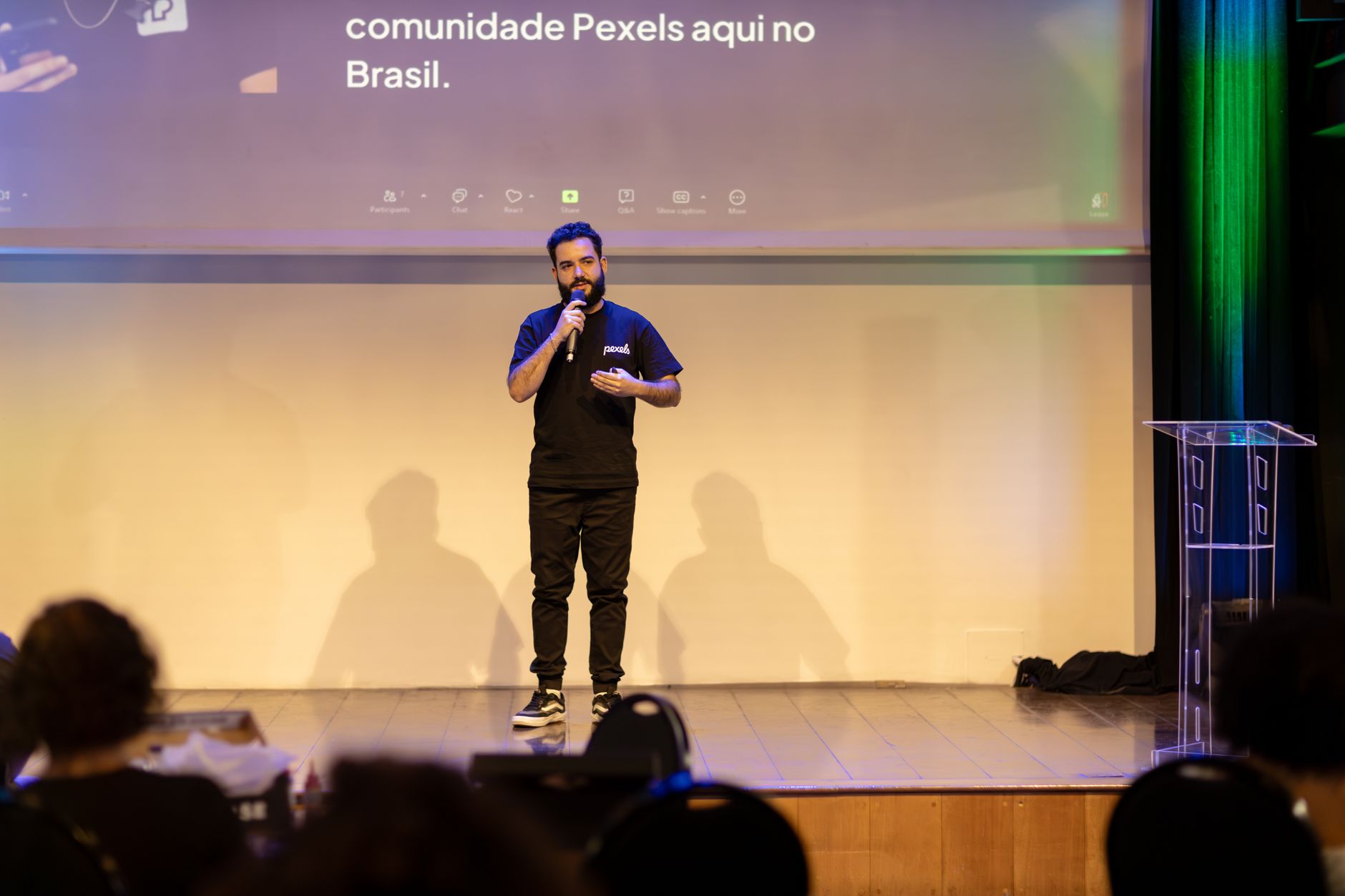
Get on the record. Podcast appearances, trade media interviews, speaking at industry events — these build durable credibility because they're searchable. Someone finds your name in a deal context, Googles you, and finds a forty-minute conversation where you go deep on gross margin strategy. That's worth ten cold outreach emails.
Be consistent on the vulnerability piece. The founders who build real brand equity publicly are the ones willing to share the hard stuff alongside the wins. I've talked openly about burning out during the Suja years, about the fundraising near-misses, about the rounds that didn't come together. That honesty is not weakness — it's credibility. People trust leaders who've been tested.
Don't confuse presence with performance. Posting every day but saying nothing is worse than saying nothing. One thoughtful, specific, opinionated post a week beats five generic "5 things I learned" posts. The standard is: would a smart CPG founder read this and say "that's exactly right"?
The Mistake I Made
For the first four years at Suja, I was completely heads-down on building the company. I didn't write publicly. I didn't speak at conferences. I barely had a LinkedIn presence.
What I had instead was a reputation in my immediate network. That was enough to get us to $70M. It wasn't enough when we were trying to get to $300M and needed to access capital markets, attract senior talent nationally, and get in front of strategic acquirers.
I should have started building in public earlier. Much earlier.
The good news: it's never too late to start, and it compounds faster than you think. The first ninety days of consistent writing will feel like you're sending things into a void. Around month three or four, you start noticing that people reference what you've written in meetings. That's when the flywheel starts.
The Principle
Your personal brand isn't a vanity project. It's your company's most leveraged asset.
Gross margin determines destiny. I still believe that. But before margin matters, you need the meeting. Before the meeting, you need the credibility. Before the credibility, you need a body of work that tells people who you are before you tell them yourself.
The founder is the brand. Build accordingly.
Ready to accelerate your CPG brand? The MBA for CPG program gives you the frameworks and tools that actually move the needle — not theoretical textbook strategies but the battle-tested operating playbook from 8 companies and 44 fundraising rounds. And if you're in a critical 90-day window and need to move fast, the 90-Day Breakthrough is built for exactly that.
Want more insights like this?
Get Jeff’s take on what’s actually working in CPG. Direct to your inbox.